Motorcycle Handling and Chassis Design the Art and Science
The science and art of level design
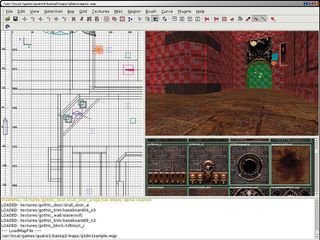
Anyone who has been a gamer over the by decade or so will have noticed that many games shout about an boosted creative characteristic: the level editor.
These allow united states, the players, to produce maps for our favourite games, and to feel like we're giving something dorsum to the gaming customs when we share them online.
These tools are, of grade, rooted in the bodily tools that game development studios utilize to make the games in the beginning place, and it'southward the significance of that toolset, for both commercial and hobbyist purposes, that we'll exist examining.
Way dorsum at the time of Doom lots of united states of america picked upward the editor and began to work out how to turn these line-models into playable levels. It was fiddly stuff, and not exactly the most obvious procedure. Reading tutorials was a must.
Present, however, things are a picayune shinier, and seemingly a little more straightforward. Every bit the tech has adult, and so the blueprint process has moved onward, giving united states new stuff to play with at home. Powerful editing suites for games such as Unreal Tournament 3 and Crysis give us far more instant gratification and flexibility than ever before, and even so the flipside of that is complexity.
Loading up one of these editors and playing with its toolset gives the impression that these game-authoring tools are more accessible and easier to utilise than previous generations, and yet commercial operations talk about games being harder to brand than ever earlier. Mods for big games are taking longer, and maps are go a colossal undertaking.
And so what'due south actually going on with level design? Is it actually becoming also complex for the hobbyist? That's been id'due south excuse for non supporting mods in Rage, for instance.
Accept we already lost the fine art of the 1-homo level? We'll talk to some of the experts who employ the current editors, see how the process has changed in the past decade, and examine some of the strange applications that people ending up finding for game level design. Could level pattern possibly be… art?
Level pattern is 1 of the fundamental processes of game evolution. Building the 3D environments we play our games in is a talent that underlies a huge number of gaming experiences, from Tomb Raider to Wipeout.
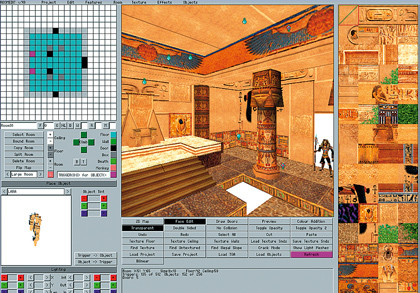
It's probably within the first-person shooter genre that this procedure is at its nigh visible, since the level-editing kit is regularly released to the states, the gaming public. Many level designers start out using these tools and and so find their manner into the industry proper.
I such case in bespeak is Neil Alphonso, a level designer currently employed at Uk studio Splash Impairment, where he's making the new shooter, Brink.
"I worked in special effects and editing for television and moving-picture show after graduating," says Alphonso, "but subsequently some introspection I idea I had the necessary skills to take a different career path, one in games. I took the time to acquire an engine and started making maps, and in a total case of beingness at the right place at the right fourth dimension, I landed a office on the outset Tom Clancy's Splinter Cell game."
Alphonso'south career path following this decision was pretty heady, even by jet-setting games manufacture standards: "I and then worked on a game called Shadow Ops: Red Mercury, and then spent some time on the infamous Duke Nukem Forever, before moving to Holland to work on Killzone 2."
Alphonso is now working on a multiplayer shooter, a genre that can be regarded as the heartland of level design, because information technology's where so many designers get started. This is evident in the kinds of maps that Alphonso mentions as classics, when we prod him for some suggestions:
"The showtime levels that always come into my mind are 'The Dark Zone' and 'The Bad Place' from the original Quake (DM4 and DM6, respectively), every bit they played a huge role in my decision to pursue a career in the games industry. A more than recent single player focused example is the outstanding 'All Ghillied Up' for Call of Duty 4: Mod Warfare, a level in which you re-enact a past mission of your hard-nosed CO. All three of those levels would certainly authorize every bit classics among level designers, only by now that list has gotten pretty large!"
A craft refined
What we've seen in the past x years is very much a refinement of the level designer'due south art. Great levels, in which everything is built to pb the experience, without ever betraying that to the histrion.
While a multiplayer deathmatch level might demand to be essentially donut-shaped and round (and then that players can move through the level to choice upward weapons and not become trapped by their opponents), other game designs demand other kinds of environments: open levels that shut downwards into corridors so yous can perform specific objectives, for example, or the non-linear levels that allow yous to explore just create paths so that you don't get lost, such as in STALKER.
Ever observe how you lot get lost far less in modernistic games than in the games we saw a decade ago? Probably not, because it'south such a subtle consequence.
Level design in single-histrion games has get the art of sign-posting, which is about pointing people in the correct directions with subtle visual aids: a calorie-free here, a claret trail in that location. As Alphonso mentions, this is all encoded inside the architectures that designers create.
"Levels like the original Halo'due south 'Silent Cartographer' have formed a sort of language that we can use to convey form, pacing, direction, and the other various aspects of level design," says the Brink level lead.
Level design is substantially a new frontier – a place where designers are learning to create bogus environments with constantly refreshed technology. What you lot learned two years ago might not exist relevant in a couple of years time. It's a huge challenge to stay on top.
Yet, what has driven the development of level-editing tools, says Alphonso, is less nearly this craft, and more than almost the commercial concerns of the people who make game engines.
Source: https://www.techradar.com/au/news/gaming/the-science-and-art-of-level-design-662204
0 Response to "Motorcycle Handling and Chassis Design the Art and Science"
Post a Comment